
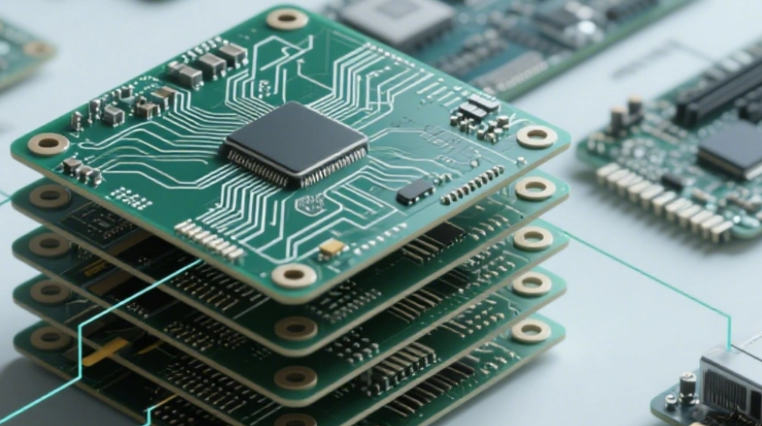
Prototype PCB assembly and mass production PCBA serve very different purposes—and treating them the same is one of the most common (and expensive) mistakes in hardware development. While prototypes focus on speed, flexibility, and validation, mass production emphasizes yield, repeatability, and cost control. Understanding these differences helps teams move smoothly from early builds to stable volume production.
Prototype PCB Assembly vs Mass Production: Overview
Prototype PCBA: Low volume, fast turnaround, frequent design changes, engineering validation
Mass Production PCBA: High volume, stable design, optimized process, long-term cost efficiency
Both stages are essential—but they require different design assumptions, supplier capabilities, and cost expectations.
::contentReference[oaicite:0]{index=0}1) Volume and Order Size
Prototype PCB Assembly
Prototype builds typically range from 1 to 50 boards. The goal is to validate electrical performance, firmware behavior, thermal margins, and mechanical fit—not to minimize per-unit cost.
Mass Production PCB Assembly
Production volumes may range from hundreds to hundreds of thousands of units. At this scale, even small inefficiencies in assembly, yield, or sourcing can translate into significant cost impact.
2) Cost Structure Differences
Prototype Cost Characteristics
Higher cost per board
NRE and setup fees are not amortized
Manual operations are common
Component substitutions may be accepted temporarily
Mass Production Cost Characteristics
Lower cost per unit due to scale
NRE and tooling spread across volume
Highly automated SMT processes
Strict BOM control and sourcing strategy
A prototype quote should never be used to estimate production cost—doing so almost always leads to incorrect budgeting.
3) Assembly Process and Equipment
Prototype Assembly
Prototype PCBA often uses a mix of automated and manual processes. Hand placement, hand soldering, and rework are common, especially for fine-pitch or experimental circuits.
Flexible setup
Quick changeovers
Lower optimization
Mass Production Assembly
Production PCBA relies on fully automated SMT lines with optimized placement programs, tuned reflow profiles, and standardized inspection steps.
High-speed pick-and-place
Stable, repeatable reflow profiles
Optimized panelization
4) Testing and Inspection Strategy
Prototype Testing
Prototypes emphasize functional validation and debugging. Engineers expect failures and design issues at this stage.
Visual inspection and basic AOI
Extensive functional testing
Manual probing and rework
Production Testing
Production focuses on catching defects early and consistently. The goal is high first-pass yield and minimal rework.
AOI as standard
X-ray for BGA/QFN packages
ICT and/or functional test fixtures
5) BOM Control and Component Sourcing
Prototype BOM Flexibility
During prototyping, temporary alternates and mixed sourcing may be acceptable. Engineers often prioritize availability over long-term sourcing stability.
Production BOM Discipline
In mass production, BOM discipline is critical. Components must be:
Available long-term
Traceable through authorized channels
Qualified for alternates before release
Many products fail to scale because prototype BOMs were never reviewed for production readiness.
6) Design for Manufacturing (DFM) and Yield
Prototype Reality
Prototype boards often tolerate lower yield. Minor solder issues or layout inefficiencies are acceptable if the board can be debugged and validated.
Production Reality
In mass production, yield is cost. Poor footprints, tight spacing, or inconsistent orientation directly increase scrap and rework.
DFM reviews become mandatory
Footprints are frozen and verified
Panelization is optimized for handling
When to Transition from Prototype to Production
A design is typically ready for production PCBA when:
Electrical and thermal performance are validated
Firmware is stable
BOM is locked with approved alternates
DFM feedback has been implemented
Testing strategy is clearly defined
Common Mistakes When Scaling PCBA
Assuming prototype cost reflects production cost
Ignoring component lifecycle and availability
Skipping DFM review before volume build
Underestimating test fixture lead time
Overusing ultra-mini or exotic packages unnecessarily
Conclusion
Prototype PCB assembly and mass production PCBA are fundamentally different stages of the same journey. Prototypes prioritize learning and speed; production prioritizes stability, yield, and cost efficiency. Teams that recognize and plan for these differences early are far more likely to scale successfully without delays, quality issues, or unexpected cost increases.
FAQ
Can I use the same PCB manufacturer for prototype and production?
Yes, and it is often beneficial. A manufacturer familiar with your prototype can provide valuable DFM feedback and smoother transition to production.
Why do prototype boards fail more often?
Prototype failures are expected. Designs are unoptimized, testing is exploratory, and components may be temporary. The purpose is to identify and fix these issues before production.
How many prototype rounds are typical before production?
Simple designs may need one or two spins. Complex or safety-critical products often require multiple iterations to validate performance, compliance, and manufacturability.